
Imaginary collaboration with Artist Shirin Neshat
"Imaginary collaboration with a contemporary Artist, Shirin Neshat" integrates her artistic methods into my work. Neshat’s art often fuses public and private life, using black and white photography, handwritten verses, and video to spark dialogue. Inspired by her approach, I use various media to address social and political uncertainties and women's experiences in patriarchal societies. Incorporating handwritten poetry, I seek beauty and intimacy while revealing personal identity.
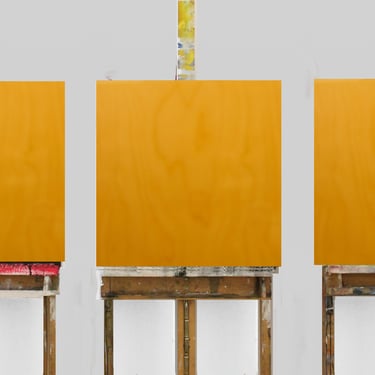
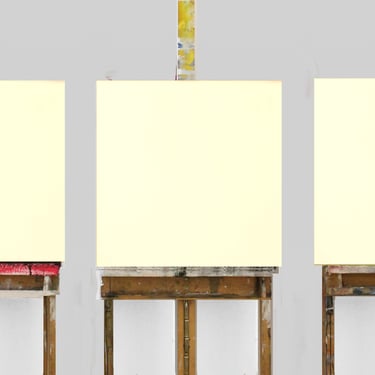
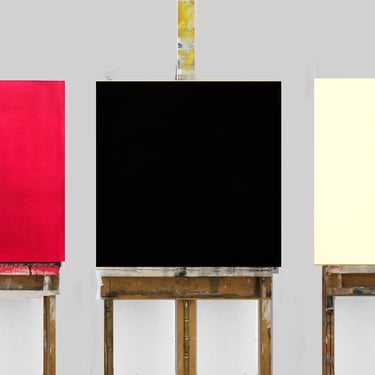
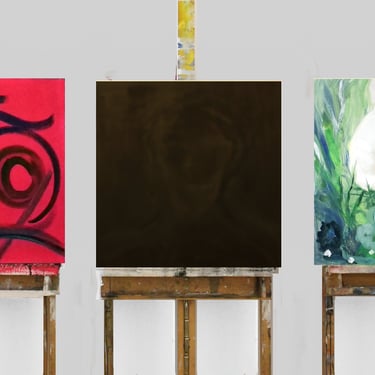
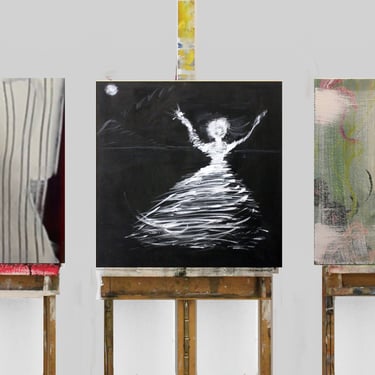
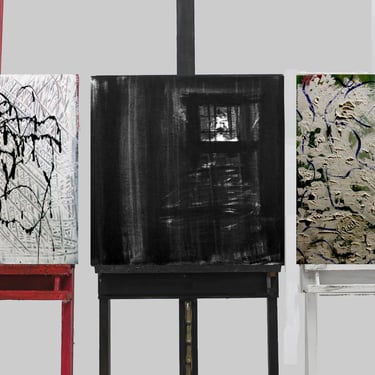
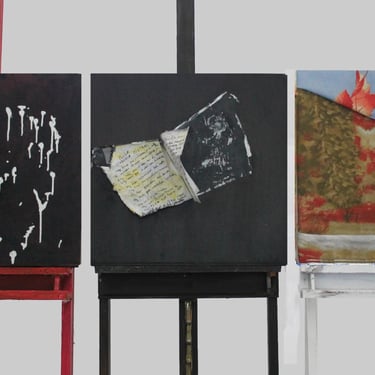
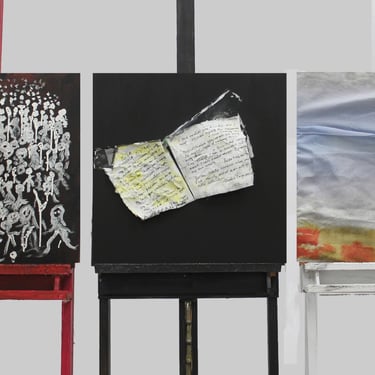
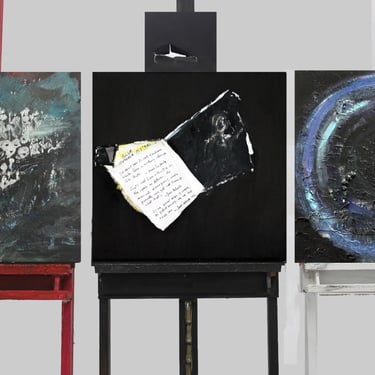
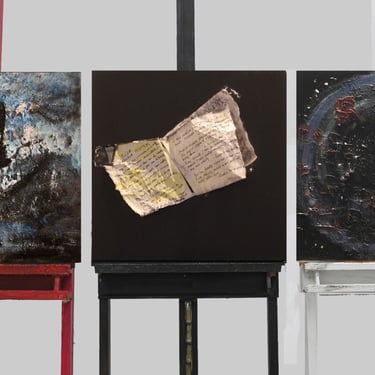
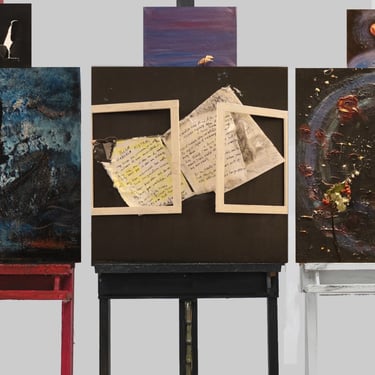
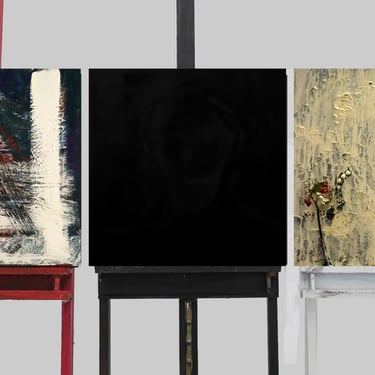
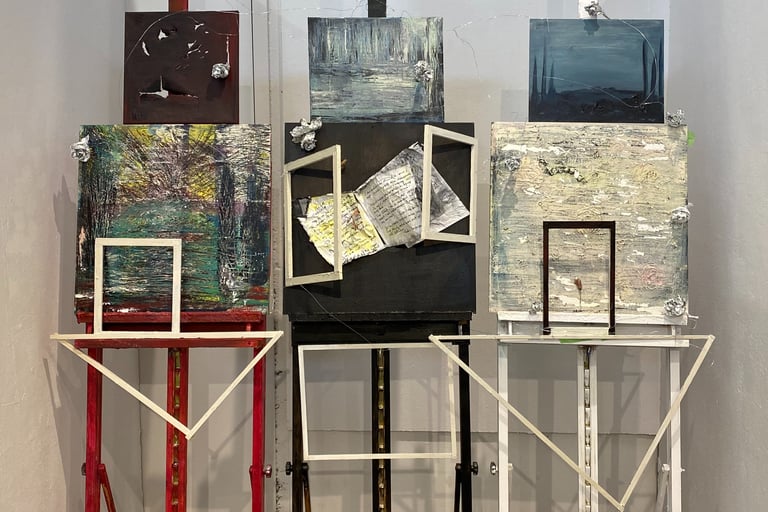
I use black and white to create a sense of reflection, pain, and resilience, and use photography to record the processes of the work. Judy Tuwaletstiwa’s "Continuing Painting" 1 and John Brown "TATLARIN" 2. Each of them offers a similar methodological framework for building a multilayered painting focusing on the process of laying down paint, on transformation, and letting go of the image. I arranged three wood panels on easels, making the easels part of the artwork. I chose wooden panels for their durability and suitability for techniques like sgraffito, drawing, dripping, molding, and altering painted and physical elements.
The work begins with a defined starting point and develops through engagement with social and political events, personal perspectives, artistic methodologies, and interactions with materials. Building upon insights from Neshat, I seek to incorporate a visual narrative that addresses political and social concerns, women's vulnerability, ambiguity, contradictions, and the nomadic life experience in a manner that resonates with millions of people.
Initially, I painted the panels red, black and white: red to depict conflict, violence, and current social political situations; black for personal insights, and women/gender issues, with the layers then worked in black and white, evoking black and white photography used by Neshat; white to express the need for harmony and the search for beauty and peace in images with universal meaning. I use garden symbolism to explore self-discovery and transformation through a connection with nature. I view "Gardens" as a place to communicate, reflect, and share experiences—visibly or invisibly—with others; connecting with nature renews my energy and reminds me of my place within it. Through photography, I record each stage of my ongoing work to create videos that narrate the painting process and explore human expression.
References:
1 Judy Tuwaletstiwa, Continuing Painting, "The Womb" Canvas , the work is included in the book "mapping water" (Publisher: Radius Books, 2007) Tuwaletstiwa's voice and art are an invitation to share a journey and meditate over ever-changing things, pain, and happiness.
2 John Brown, "TATLARIN", 2011 oil on panel, 183 x 213 cm. John Brown approach to painting is a constant transformation of images, by adding and subtracting elements, giving a glimpse into the changes of things, the natural stages of a life.
Conclusion
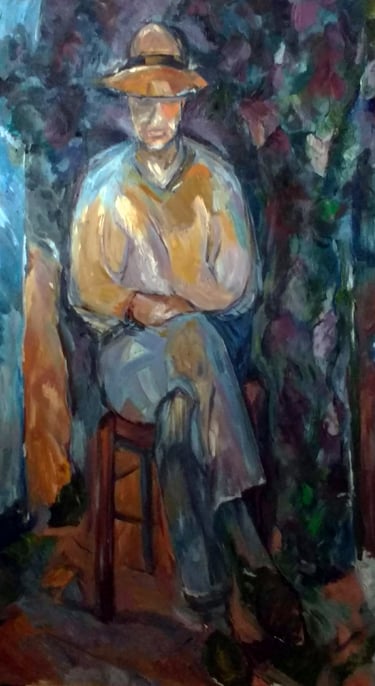
Perpetual Transformation series
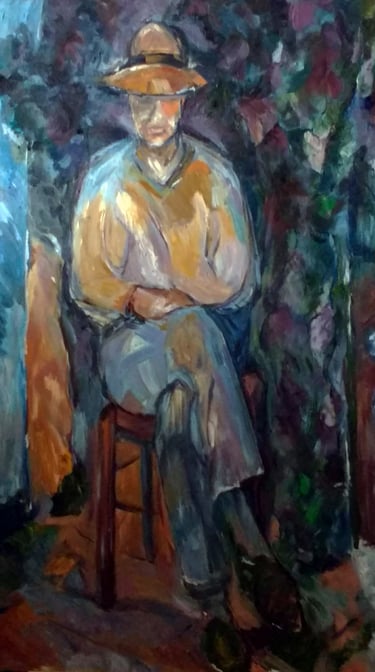
Title: Self portrait (as a painter and a model) Inspired by Paul Cézanne The Gardener
Media: Oil on wood panel
Size: 154 cm x 90 cm
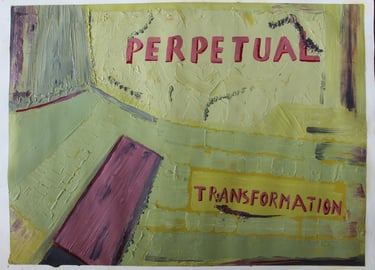
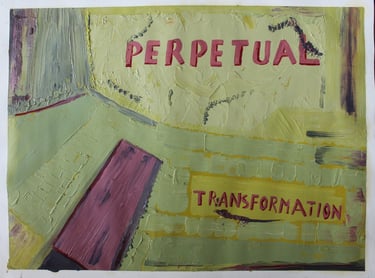
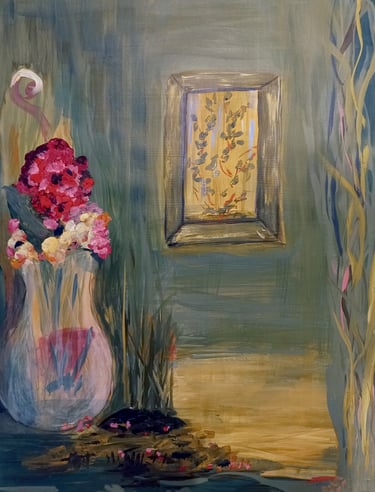
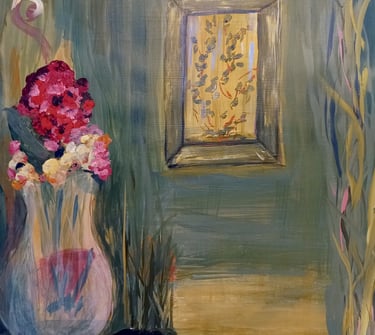
Title: Perpetual Transformation
Media: Oil
Size: 73 cm x 53 cm
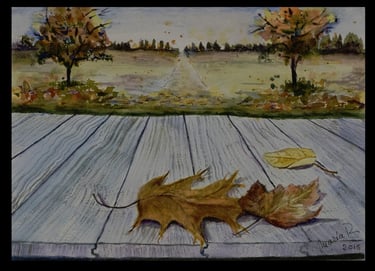
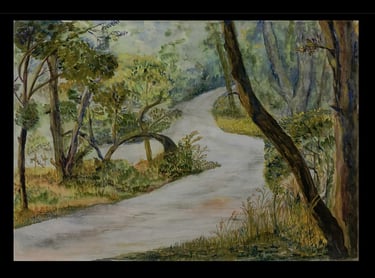
Title: Fall view
Media: Watercolour
Size: 60 cm x 40 cm
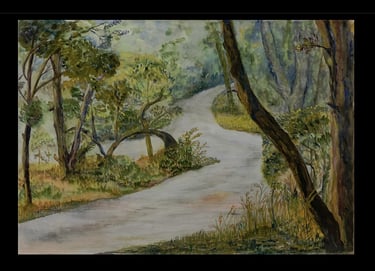
Title: Waking up - Mount Kosciuszko AU
Media: Watercolour
Size: 70 cm x 50 cm
Title: A dream vision
Media: Oil
Size: 50 cm x 700 cm
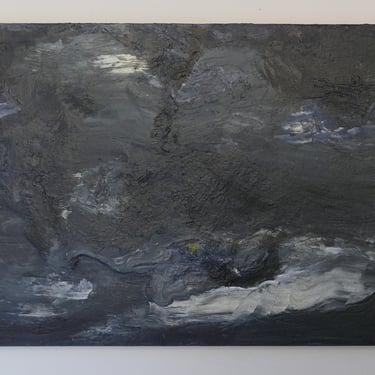
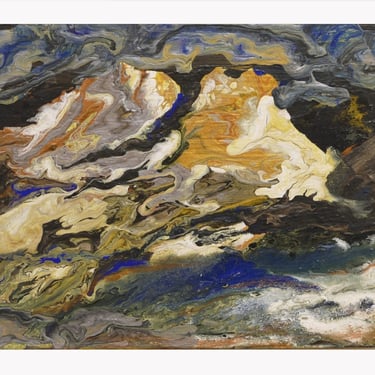
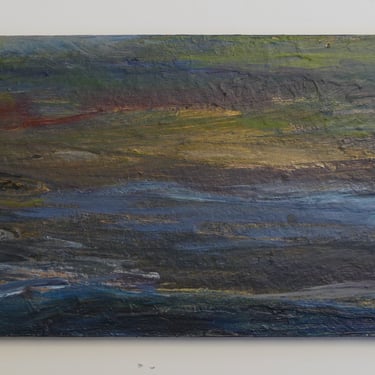
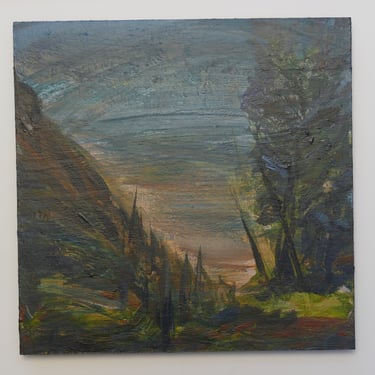
Title: Night Impressions at Jasper National Park
Media: Acrylic
Size: 30 cm x 25 cm (each)

A Self-Portrait Performance: The Master and The Muse
The Genesis
The film opens with a moment of quiet curation—browsing the pages of an art book, selecting the historical roles I am about to inhabit. This is the beginning of a decision to bridge the gap between two men: Paul Cézanne, the rigorous architect of Modernism, and Vallier, his final gardener and quiet muse.
The Performance of Identity
In this work, I document a conceptual performance of identity. Stepping into the historic home and garden of Cézanne, I inhabit a duality: I am the master of Modernism, and I am Vallier, his sitter.
As a woman assuming these two male identities at several layers, the project became a challenging and rewarding study of the "self" as a fluid, constructed form. By alternating between the analytical, constructive gaze of the painter and the weathered, earthy stillness of the gardener, I explore the tension between the observer and the observed.
The Process and the Presence
The video chronicles the technical rigors of the studio—the translation of these identities into oil on canvas using the "constructive stroke." It captures the friction of reconciling my own features with the structural language of Post-Impressionism, building a synthesis of the feminine and masculine, the historical and the contemporary.
The Conclusion
The performance culminates in the garden at Les Lauves. The film concludes with me sitting in the dappled light, dressed as Vallier, posing for an absent Cézanne. In this final moment, the artist and the subject become one, and the portrait is no longer just a painting on a wall, but a lived presence in the landscape.